
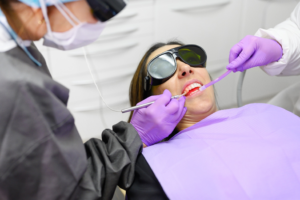
Gum disease is more common than you might think—and it can even sneak up on you! In fact, it’s estimated that over half of all adults over the age of 30 have some form of gum disease. Many people don’t realize they have it until symptoms like bleeding gums and bad breath become noticeable. But is gum disease something that your dentist can easily help you with once it sets in? In most cases, yes, but waiting too long can lead to irreversible damage! Here’s what you need to know.
Understanding Gum Disease
Gum disease, also called periodontal disease, normally occurs when plaque and bacteria build up along the gumline. It typically progresses in stages, with the first being gingivitis. This causes the gum tissue to become red, swollen, or bloody when brushing or flossing. Fortunately, it’s often reversible with professional cleaning and improved oral hygiene.
However, left untreated, it can turn into periodontitis. The gums begin pulling away from the teeth, forming pockets that harbor more bacteria. The bone tissue supporting the teeth may also start to deteriorate. At this point, treatment becomes focused on controlling the disease and stopping its progression. But if things continue to worsen, teeth may begin to loosen or shift, and significant bone loss can occur.
Recognizing Gum Disease Symptoms
Even though gum disease isn’t always obvious, there are some clear signs of it you should be aware of:
- Gums that bleed easily during brushing, flossing, or even eating.
- Red, swollen, puffy, or tender gums instead of firm, pink tissue.
- Gums that pull away from the teeth, causing the roots to be exposed.
- A foul taste or constant bad breath that does not go away.
- Teeth that feel loose or move, often due to bone loss.
- Pus or drainage between the gums and teeth.
- Changes in how your teeth fit together when biting.
How Your Dentist Can Help
The best way to combat gum disease is early detection and consistent oral care. Brush and floss every day, schedule routine dental checkups, and avoid tobacco, which increases the risk of gum disease. However, if you find yourself experiencing obvious symptoms of the condition, turn to your dentist for help.
One possible course of action is scaling and root planing, which is a detailed, deep cleaning of the deep gum pockets to remove the infiltrative bacteria. This is often combined with antibiotic therapy, in which special medication is used to reduce the presence of bacteria and keep your mouth free of further infections. Your treatment plan will be personalized based on your needs, but it’s important to leave things up to your dentist—the condition will not heal itself.
Gum disease doesn’t have to be permanent; however, timing is key. Catching it early gives both you and your dentist the best chance to reverse its course and restore your dental health!
About the Practice
Our team here at Cove Choice Dental has proudly served patients and families in Copperas Cove and the nearby area for several years. We offer a wide range of services, including gum disease treatments such as scaling and root planing, antibiotic treatment, and more. If you have any questions about the blog or you’d like to schedule an appointment for yourself or a loved one, you can call or reach out online for more information or assistance. Telephone: (254) 987-6777.